
You want to grow. So you take action.
- You double ad spend to get more leads.
- You hire more salespeople.
- You launch a new campaign.
These seem like logical moves. But sometimes they backfire – not because the idea was wrong, but because the system wasn’t ready.
When you improve one stage without understanding how it affects others, you can actually make things worse.
That’s not pessimism. It’s systems thinking.
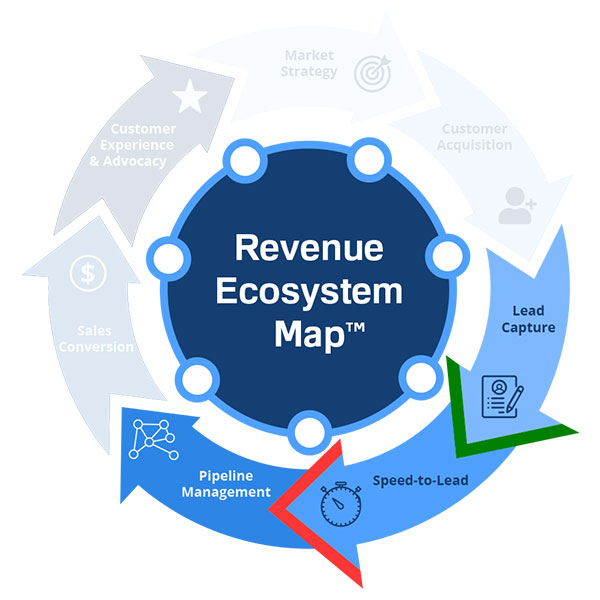
Isolated fixes can break downstream stages.
Classic Example: More Leads Without Better Response
The move: Increase ad budget by 50%.
The system: Response time averages 4 hours. No lead alerts. Unclear ownership.
What happens:
- More leads flow in.
- Response time stays slow (or gets slower because volume increased).
- Contact rate drops because more leads are waiting.
- Conversion falls because leads engage with competitors.
- Team gets overwhelmed and demoralized.
Result: You spent more money and got worse results.
The lesson: More leads into a broken system doesn’t fix the leak – it amplifies the waste.
Doubling down on what’s not broken ignores what is. Before scaling, stabilize.
Example 2: Hiring More Salespeople Without Pipeline Discipline
The move: Double the sales team.
The system: Pipeline stages are undefined. No qualification criteria. Stale deals everywhere.
What happens:
- New reps are trained on a broken process.
- They spend time on unqualified leads.
- They inherit stale deals from the old pipeline.
- Forecasts become even less reliable.
Result: You have more reps, not more revenue. Chaos scales.
The lesson: Hiring doesn’t fix process. Fix the process first, then hire.
Example 3: Improving Onboarding Without Fixing Retention Metrics
The move: Invest in a beautiful onboarding sequence.
The system: Churn is high because customers don’t see value after 90 days. You never measure NPS or usage.
What happens:
- Onboarding is smooth.
- Customers are happy for the first month.
- Then they leave – and you don’t know why.
Result: You spent money on the wrong leak. The problem was later in the customer lifecycle.
The lesson: Always measure the full journey. Don’t optimize the beginning if the end is the real problem.
Why Isolated Fixes Fail (Root Causes)
1. You don’t see dependencies
Every stage depends on the previous one. If you improve Customer Acquisition (Stage 2) but Speed-to-Lead (Stage 4) is broken, the bottleneck just moves.
2. You ignore capacity constraints
A system has limited throughput. Adding more input without increasing capacity creates congestion. That’s true for factories – and for revenue systems.
3. You optimize the wrong metric
You improve ad click-through rate, but leads don’t convert because follow-up is weak. You optimized the wrong stage.
4. You don’t measure before and after
Without measurement, you don’t know whether your change helped or hurt. You fly blind.
How to Fix Systemically (Not Locally)
Step 1 – Map the system
Use the Revenue Ecosystem Map™. Identify the 7 stages. Note which stages are currently weak (use the Self-Assessment).
Step 2 – Find the real bottleneck
Not every weak stage is the constraint. The bottleneck is the stage that, if improved, would unlock the most growth.
Step 3 – Improve that stage, but measure downstream
When you improve a stage, watch the stages after it. Did they get better, worse, or stay the same?
Step 4 – Reinforce, don’t ignore
If you improve lead volume, also improve response capacity and pipeline management at the same time. Create a coordinated upgrade.
Step 5 – Iterate
One improvement is rarely enough. Find the next bottleneck. Repeat.
Real Client Example: The Wrong Fix
Client: Home services company, $8M revenue.
Problem: Revenue plateaued.
Their fix: Hired two additional sales reps (+40% headcount).
Result: Revenue didn’t move. Reps were frustrated. Turnover followed.
Our diagnosis: The bottle-neck was Speed-to-Lead – response time averaged 3 hours. New reps were calling cold, old leads. No amount of sales talent fixed slow response.
New fix: Installed lead alerts, routing, SLAs. Response time dropped to 5 minutes.
Revenue impact: +30% in 90 days – from the same number of reps.
Cost of wrong fix: $80k in wasted salary and training. Cost of right fix: $5k.
How the Self-Assessment Helps
The Revenue System Self-Assessment™ scores each stage 1-10. A low score doesn’t automatically mean that stage is the bottleneck – but it’s a strong signal.
Combine the Self-Assessment with the Revenue Leakage Estimator™ to see which stage, if improved, would create the biggest financial impact. That’s likely your bottleneck.
When to Book a Diagnostic
If you’re unsure which stage is the real bottleneck, or if you’ve tried to fix something and made things worse, book a Revenue Pipeline Diagnostic™.
We’ll map your system, identify the constraint, and deliver a phased roadmap – no more guessing.
Improving one stage without understanding the system can break another.
Before you scale, diagnose. Before you hire, fix the process. Before you spend, measure.
Systemic optimization beats isolated tactics every time.